
For years, dashboards were the pride of every data-driven business. They brought numbers to life, showed performance trends, and made reporting easier. But somewhere along the way, they stopped being useful.
Most executives will admit they rarely open their dashboards. In fact, research shows that nearly 80% of potential decision-makers never use BI tools directly. They rely on others to interpret the data for them. By the time the insight reaches them, it’s already old news. That’s because dashboards tell you what happened. They rarely explain why it happened, or what to do next.
The world of enterprise intelligence is shifting fast, and the new hero in the story isn’t a dashboard or a chatbot. It’s something smarter and more intuitive, the Enterprise Agent.
What is an Enterprise Agent?
An Enterprise Agent goes beyond quick replies. It interprets data, connects systems, and turns insights into actions. It’s an intelligent digital colleague that understands your data, your goals, and your language.
Ask it, “Why are production costs higher this quarter?” and it won’t just show a graph. It will explain, “Supplier delays raised raw-material costs by 12%. Adjusting schedules could save 8% next month.”
That’s the difference. Enterprise Agents do not stop at displaying numbers; they interpret, contextualize, and recommend. They bridge the gap between information and action.
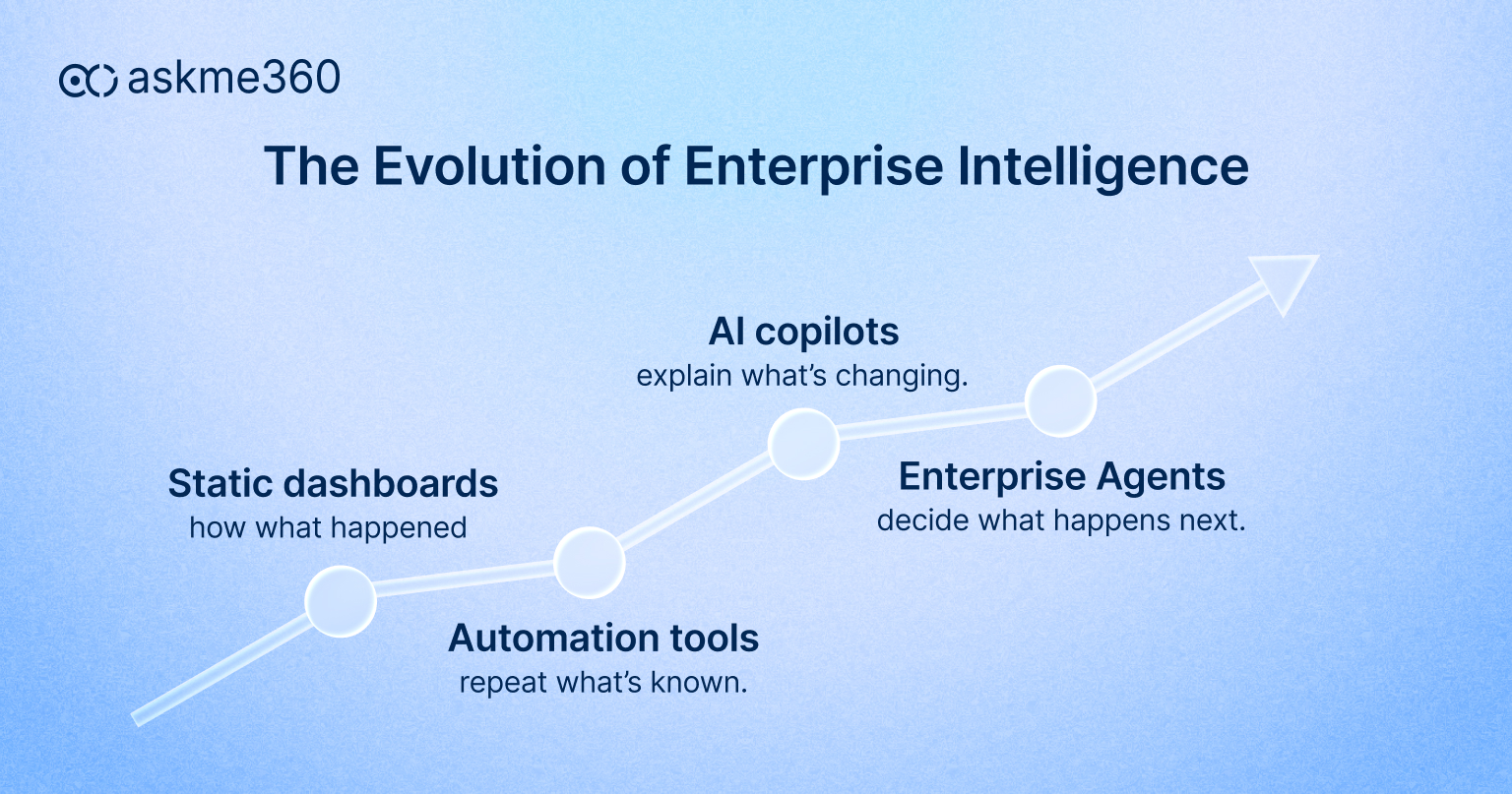
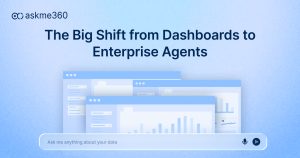
The shift from dashboards to dialogue
Methods of interaction with data are changing. Instead of searching for answers, you can now have conversations with your systems. Would you not like it if you log in, and instead of staring at ten charts, you see a note that says,
“Energy use spiked in Plant B due to compressor load. Should I prepare a cost-optimization report?”
That’s not a static report, but a discussion starter. Enterprise Agents make analytics feel natural and accessible, even for non-technical users. They don’t wait for you to find insights, they bring them to you.
How do enterprise agents work?
Enterprise Agents deliver real-time insights from ERP, CRM, and IoT systems in seconds. Gartner predicts that by 2026, 40% of enterprise applications will use AI agents, up from less than 5% in 2025.
For CFOs, that means instant answers like:
“What will next quarter’s cash flow look like if procurement costs rise by 10%?”
For operations heads, it could be:
“Which plants are likely to exceed energy budgets this month?”
Hence, the value isn’t just speed, it’s foresight.
Now let us look at the three things that make Enterprise Agents powerful:
- Natural language understanding – They understand how humans ask questions.
- Contextual intelligence – They know your KPIs, departments, and workflows.
- Action orientation – They don’t just inform; they execute, trigger alerts, or generate reports automatically.
Together, these capabilities create a living “nervous system” inside your organization, always listening, learning, and responding.
Why dashboards are becoming digital clutter
Most dashboards end up being opened once and forgotten. They show historical data but don’t drive decisions. Analysts spend hours creating reports that summarize the past while the opportunity to act slips away.
Enterprise Agents change this completely. They provide:
- Personalized insights for each function, finance, HR, operations, and supply chain.
- Push notifications when metrics change or thresholds break.
- Automated summaries that explain causes and next steps.
Instead of a single pane of glass, you get a continuous flow of relevant intelligence wherever you work, Teams, email, or Slack.
From automation to autonomy
Most organizations have automated routine tasks. But true advantage comes from autonomy, systems that learn and adapt.
A procurement agent can notice repeated vendor delays and suggest better suppliers. An HR agent can flag attrition risk before it spikes. These systems don’t just respond; they anticipate.
That’s the leap from automation to autonomy, from following rules to making informed decisions in real time.
Turning data into stories
People don’t act on numbers; they act on stories. Enterprise Agents weave data into clear narratives:
“Maintenance costs rose 10% last month because of unplanned downtime in two plants. Supplier X caused 60% of the increase.”
This kind of storytelling makes data meaningful. It helps every stakeholder, from managers to C-suites, grasp insights instantly and make faster calls.
A new human-machine partnership
Enterprise Agents aren’t replacing humans. They’re amplifying them. By handling repetitive analysis, they free teams to focus on creativity and strategy. They also break down silos, finance agents talk to supply-chain agents, HR agents coordinate with operations, creating a connected, insight-driven ecosystem.
It’s like having a team of digital coworkers, each expert in one area, working together toward shared business outcomes.
Trust and control come first
With autonomy comes responsibility. The best enterprise agents are built with governance in their DNA.
Every action is traceable, every workflow compliant, and every dataset secure. Role-based access, encryption, and continuous audits ensure that speed never comes at the cost of trust.
As EY reported, 65% of global CEOs see AI as a force for good, but only when it’s trusted. Enterprise Agents make that balance possible, fast insights, responsible design.
The business case
Why are leading enterprises investing in this shift?
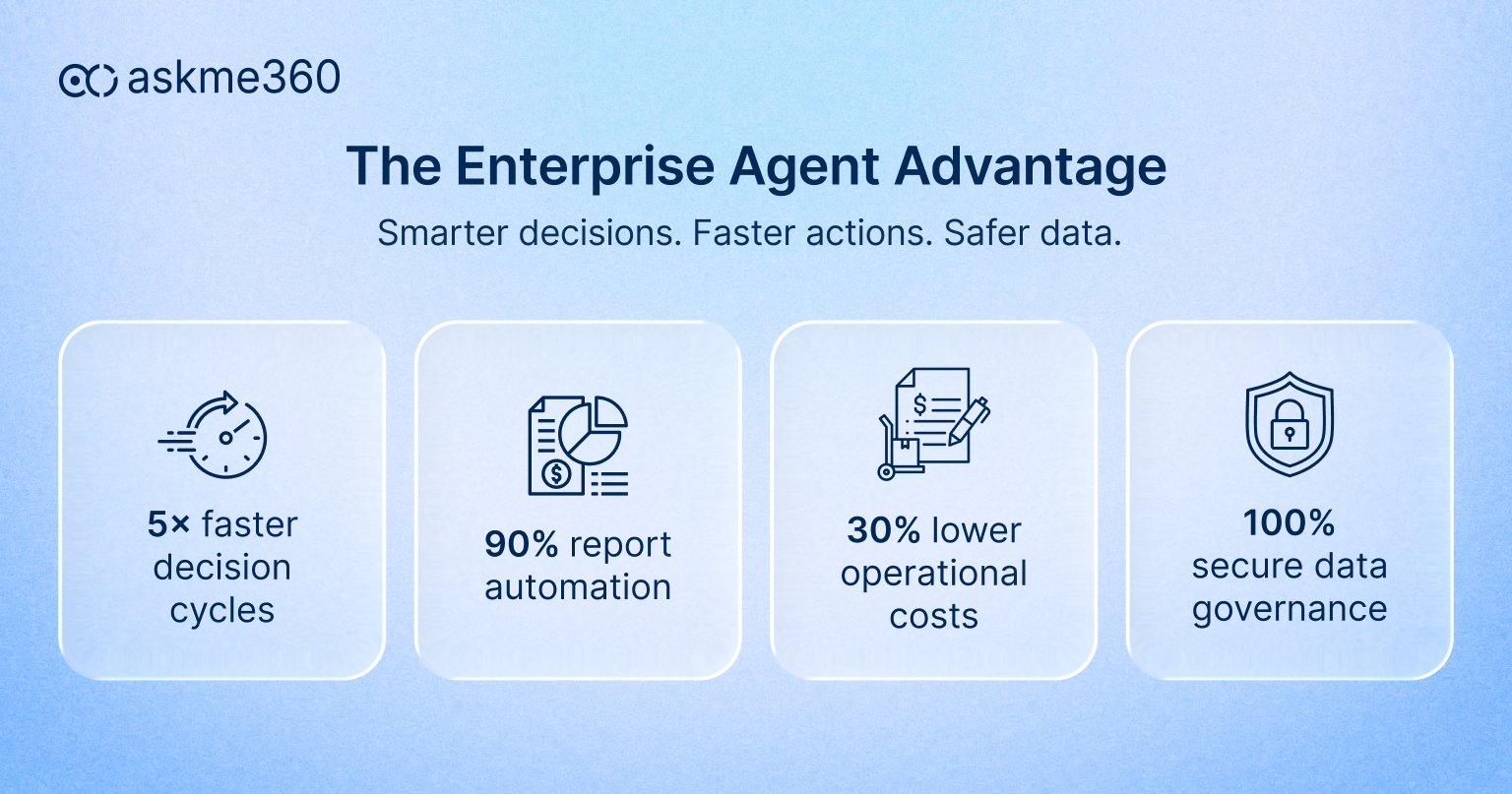
- Thousands of hours saved by removing manual reporting.
- Instant decision-making, no waiting for data teams.
- Higher accuracy through consistent, validated data sources.
- Lower operational costs thanks to automation.
- Greater engagement as every employee can query data directly.
Enterprise Agents democratize intelligence, making smart decisions possible for everyone, not just analysts.
The next evolution will be orchestration, where multiple agents collaborate to simulate scenarios, optimize operations, and even negotiate outcomes.
Imagine a network of agents monitoring energy use, adjusting production schedules, and forecasting costs together. It’s not futuristic; it’s already being piloted in advanced enterprises worldwide.
The businesses that embrace these intelligent systems early will gain an edge measured not just in efficiency, but in agility and foresight.
Moving beyond bots and dashboards
Dashboards gave us visibility. Bots gave us convenience. Enterprise Agents give us intelligence. They turn data into strategy and insights into action. They learn, adapt, and keep pace with your business in real time.
In a world where every second matters, the leaders who adopt Enterprise Agents will move faster, decide smarter, and operate with unmatched clarity.
askme360 - bringing the enterprise agent to life
At HIPL, we see this transformation through askme360, our AI-powered enterprise agent that reimagines how businesses interact with their ERP systems.
askme360 connects seamlessly with Oracle E-Business Suite and PeopleSoft, letting you ask questions in plain language, no coding, no waiting. You get instant answers, clear visualizations, and actionable insights.
It also comes with SOC-compliant security, role-based access, and single sign-on, ensuring your enterprise data stays private and protected.
askme360 helps your teams move beyond dashboards and into the future of intelligent decision-making, where you can ask, get insight, and act in one smooth motion.
5 Responses